
KEY POINTS
- A concussion is a type of traumatic brain injury.
- The effects of a concussion can be serious.
- A child with a concussion needs to be seen by a health care provider.
Concussions are brain injuries
A concussion is a type of traumatic brain injury—or TBI—caused by a bump, blow, or jolt to the head or by a hit to the body that causes the head and brain to move rapidly back and forth.
This sudden movement can cause the brain to bounce around or twist in the skull, creating chemical changes in the brain and sometimes stretching and damaging brain cells.1 These changes in the brain lead to symptoms that may affect how a child thinks, learns, feels, acts, and sleeps.2 Symptoms are usually most severe right after the injury.3 Learn more about the signs and symptoms of concussion.
Concussions should be taken seriously because they can produce changes in your child’s brain, body, and behavior.2 Most children with a concussion feel better within 2 to 4 weeks.345 However, some children have symptoms that effect their behavior, mood, memory, or emotions for months or longer.67 Symptoms that stay around can affect children as they grow up and even through adulthood.2
Concussion symptoms can make it hard to do regular activities at home and school. Having a history of previous concussions or experiencing more severe symptoms right after the concussion increases the chance that a child will have a longer recovery.8 A child with multiple concussions also has a greater chance of experiencing chronic health problems later on.8
Get medical care for a concussion
You might feel anxious, afraid, or uncertain if you think your child may have experienced a concussion. These feelings are normal. You can play an active role in your child’s recovery by getting them checked by a health care provider. Health care providers have treatments to help. And getting care from a health care provider can help speed your child’s recovery. Learn more about what do if you think your child has a concussion.
See the Where to Get Help webpage if you need help finding a health care provider.
Try to avoid repeat head impacts and concussions
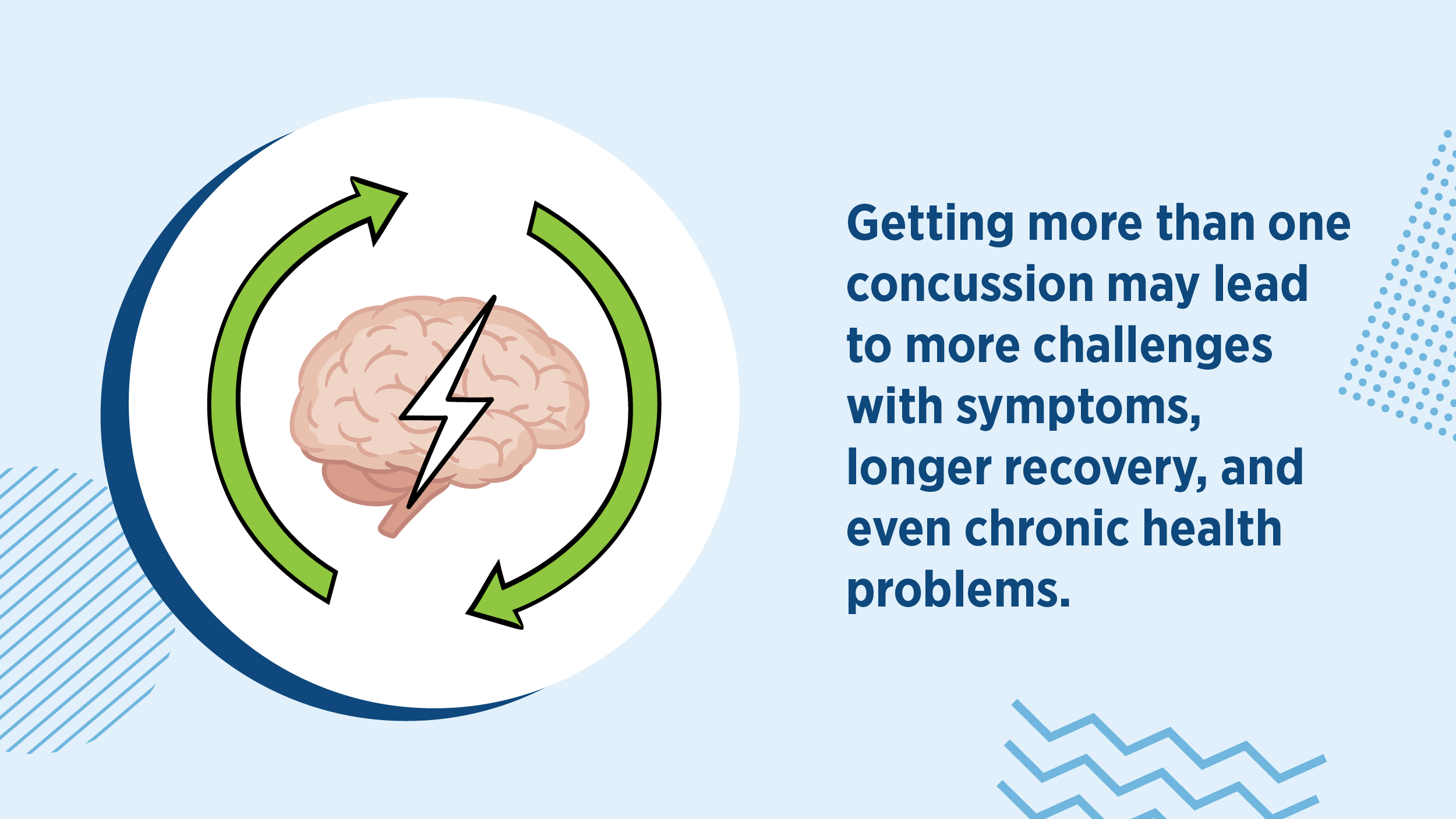
Exposure to repeated head impacts increases the chance for concussions and other TBIs, as well as the potential for changes in the brain and brain diseases.9101112 There’s a bigger risk of more serious and longer-lasting symptomswhen a child has multiple concussions.413 This is especially true when there’s not enough healing time between injuries.
A child with a history of multiple concussions also may have:
What you can do
There are several things you can do to help prevent concussions.
- Explore concussion signs and symptoms and know what to watch for if your child experiences a bump, blow, or jolt to the head.
- Learn more about what to do after a concussion, including instructions and recovery tips.
- Get information on moderate or severe brain injury that may lead to long-term or life-long health problems.
- View data on TBIs among children during sports and recreation activities.
- See the Where to Get Help webpage to find support and medical care in your community.
Original Article – https://www.cdc.gov/heads-up/about/index.html